Tibetan Healing Training

View program website

Hybrid

Dates: TBD

100 hours • TBD

Dedham, MA, US

Betty Riaz Kevan Gale

Led by

Betty Riaz and Kevan Gale

Level 3 Yoga Teacher Badge CYT-L3
Inquire

See up-front pricing

Purpose

Each morning, we will engage in the Medicine Buddha mantra and Nejang breathing techniques. These powerful practices, promote the circulation of vital energy, and are known to cleanse the subtle channels within our bodies.

What to expect

Our days will be filled with interactive and experiential activities designed to deepen our understanding and application of Tibetan healing principles. Together, we will explore the foundations of Tibetan Healing Constitutions, a profound system that recognizes the unique interplay between our individual constitution, lifestyle, and environment. Additionally, we will have the opportunity to immerse ourselves in a daily Nejang practice; which purify and rejuvenate the physical, mental, and energetic layers of our being.

Nourishing our bodies with healing foods is an integral part of maintaining a healthy body. Throughout the weekend, we will engage in the art of making ghee and kitchari, using wholesome ingredients and learning to make your own base indian cleansing porridge.

We will also explore the creation of Tibetan herbal packets, (Horme) infusing them with the transformative power of traditional medicinal herbs.

Style/Lineage

Step into a world of profound healing and rejuvenation as you join Betty Riaz and friends for a transformative weekend centered around the ancient Tibetan healing traditions.

Our weekend will commence with the revered Khenpo Migmar, where we will be blessed with the empowering Medicine Buddha mantra. As we immerse ourselves in the 108 vibrations of this sacred mantra, we will awaken our innate healing abilities and invite positive energy into every aspect of our being.

Core competencies

By the end of this program, graduates will be able to…

Teaching Skills
  • Explain how, sparing use of oil, and light pressure support Wind (Loong) pacification, linking each choice to nervous-system calm and student comfort.
  • Explain the safe method for applying a warm Hormé compress to a partner in Shavasana, describing temperature testing, rhythmic pressing, and when to stop.
Anatomy, Physiology, Biomechanics
  • Explain the subtle energy bodies of Tsa, Loong, and Tiglé which comprises the vajra body, and why energetic channels restrict the circulation of winds, describing how warming practices aim to restore smooth flow.
  • Use a constitutional self-assessment to identify personal humoral tendencies, scoring it honestly against a current-decade baseline and noting what matched, surprised, or remains unclear.
  • Define health as the unchanged state and disease as the changed state, identifying the Body-Energy-Mind triangle and the excess, deficiency, and disorder triangle accurately.
Lifestyle & Ethics
  • Practice chosen take-home commitments across movement, food, and mind practice, applying them consistently to match personal humoral tendencies.
  • Explain how time of day, season, and life stage shift constitutional needs, describing why a routine suited to winter may differ from one suited to summer.
  • Practice a daily offering to the body through a small, sustainable commitment, keeping it consistently in a spirit of reverence rather than self-criticism.
  • Demonstrate the preparation of plain or spice-infused ghee, working safely with hot fat and clarifying it until the solids turn golden and the aroma is nutty.
Practice Skills
  • Practice the Nejang sequence or a selected portion of it, moving with rhythm, moderate effort, and steady attention to channel opening.
  • Practice Medicine Buddha mantra recitation in call-and-response or steady repetition, maintaining accurate pronunciation and a settled seated posture.
  • Practice seated meditation in the Vairocana posture, maintaining accurate alignment, relaxed shoulders, and nasal breathing throughout.
  • Practice the nine-fold breath gently through the left, right, and central channels, keeping the breath smooth and prioritizing safety over intensity.
  • Practice a guided Yoga Nidra session from intention through return, sustaining relaxed awareness and a slow, gentle re-entry.

AYC allows each school to state and evaluate the competencies each student acquires. Students rate how well the program delivered them.

Program Emphasis

Evaluation methods

Program evaluations
  • Oral Exam
  • Solo Project Or Presentation
  • Direct Observation

Program Faculty

Featured Faculty

Betty Riaz
Betty Riaz
Level 3 Yoga Teacher Badge
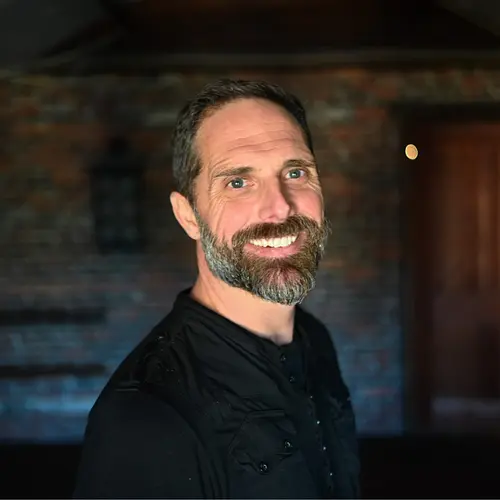
Since 2009, Betty has studied and shared the healing and spiritual practices of the Tibetan yogic tradition.
Dedham, MA, US

Policies

View program website
AYC Cookies 🍪
We use cookies to optimize your web experience. We do NOT sell your data or use it for ads.
Manage preferences